

MtDNA – Female Ancestor line of Elisabetta Grassetti (wife of Antonio Tinos I) via her great-grandson Jose Wilson Areias Mendes.
MtDNA – Linha de ancestrais feminina de Elisabetta Grassetti (esposa de Antonio Tinos I) através de seu bisneto José Wilson Areias Mendes
<>Anna Rossit *1820 <> Elisabetta Grassetti *13/10/1840 <> Marcellina Tinos *20/2/1876 <> Laura Gomes Areias *9/10/1921 <> Jose Wilson Areias Mendes *8/3/1948
I have not found yet more information about Anna Rossit Ancestors, but I know this surname Rossit has been present where she was born ( Strassoldo, Cervignano del Friuli, Udine – before Gorizia as part of the former Austro-Hungarian Empire) since 1764. In 1764 the greengrocer of the Strassoldo Count was a Rossit (source: book “Strassoldo N’ell Agro di Aquileia” by Luigi Deluisa.). Although the surname Rossit is not the line represented in this MtDNA test because this is a test of the female line – the mother, of the mother, of the mother… etc of Elisabetta Grassetti. Therefore, the surname may change each generation we go back.
Ainda não localizei mais informação sobre os antepassados da Anna Rossit, mas sei que esse sobrenome Rossit está presente em Strassoldo, onde ela nasceu (Strassoldo, Cervignano del Frriuli, Udine, antes Gorizia como parte do antigo Império Áustro-Hungaro) desde 1764. Em 1764 o horteiro ( de frutas e vegetais) do Conde de Strassoldo era um Rossit. (fonte – livro “Strassoldo N’ell Agro di Aquileia”, do autor Luigi Deluisa). Entretanto o sobrenome Rossit não é o representado nesse teste MtDNA, porque esse teste é apenas para a linha feminina – a mãe, da mãe, da mãe… etc da Elisabetta Grassetti. Logo o sobrenome pode mudar a cada geração anterior.
Match Origin / Relação encontrada
Siberia, Russia. Generally speaking, U4 is more common in Baltic and Slavic countries and around the Caucasus than anywhere else.
- U4b1a4: found in the Altai (Tubalar) ( The Altaians (also Altayans) are a Turkic people living in the Siberian Altai Republic and Altai Krai, Russia. )
Sibéria, Russia. Em geral, U4 é mais comuns em países bálticos e eslavos e ao redor do Caucasus do que em qualquer outro lugar.
- U4b1a4: encontrado no Altai (Tubalar) ( Os Altaians ( Altayans) são Povo Turkic (tribo) vivendo na Siberian Altai Republic e Altai Krai, Russia. )
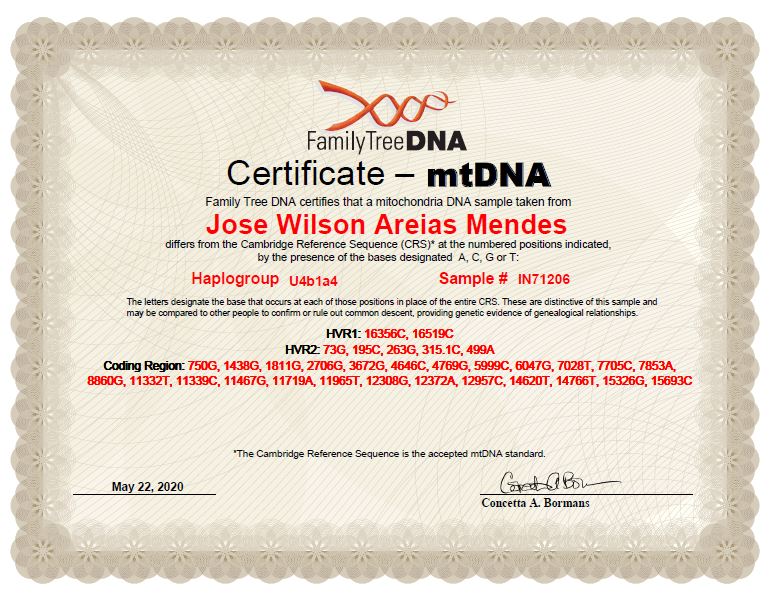
Haplogroup U ( U4b1a4 )
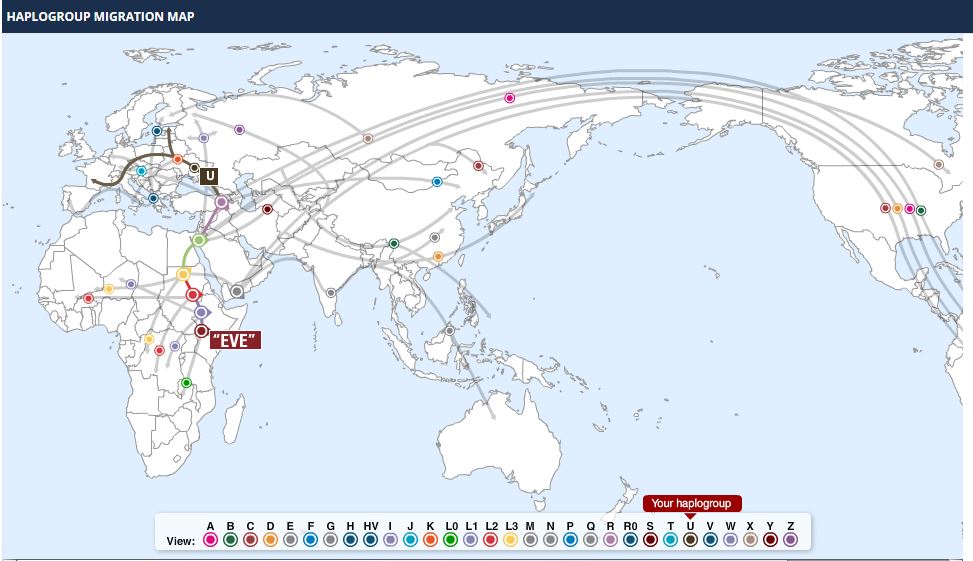
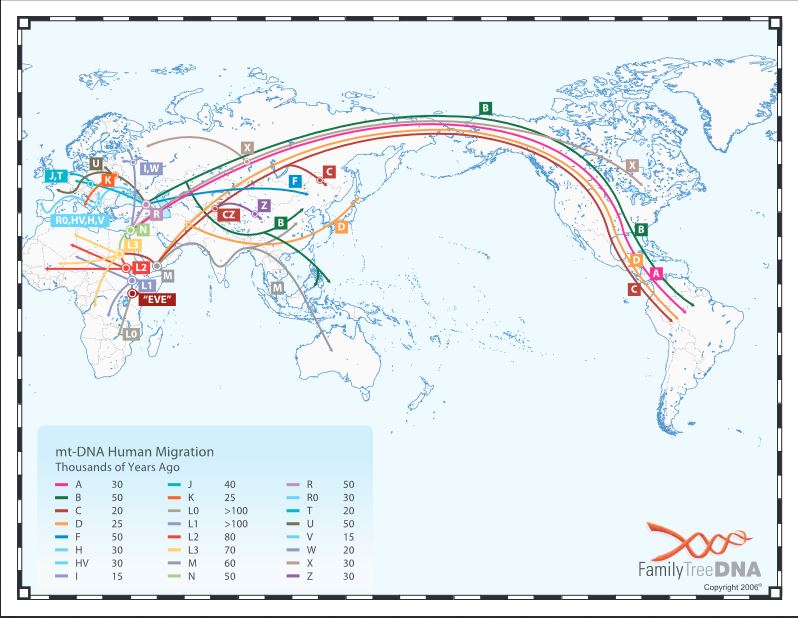
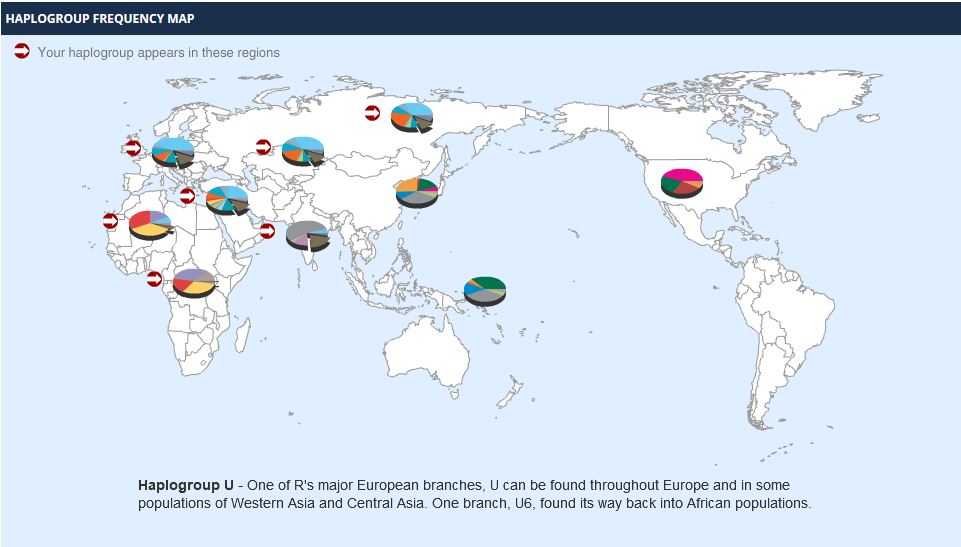
GENERAL INFORMATION IN ENGLISH / INFORMAÇÃO GERAL EM INGLÊS
Haplogroup U4 is found at a frequency ranging from 2% to 6% in most regions of Europe. Its highest frequency is observed among the Chuvash (16.5%), Bashkirs (15%) and Tatars (7%) of the Volga-Ural region of Russia, followed by Latvia (8.5%), Georgia (8.5%), Serbia (7%), and southern Daghestan (6.5%). Generally speaking, U4 is more common in Baltic and Slavic countries and around the Caucasus than anywhere else. Within Europe U4 is rarest in fringe regions such as Ireland (1.5%), Portugal (1.5%), north-west Spain (0.5%, except Cantabria which has 3%), Finland (1%), and especially among the Welsh, Sardinians and Saami, where it is completely absent. U4 is not found in countries or regions that lack the paternal lineage R1a (Balto-Slavic and Indo-Iranian branches of the Indo-European speakers), with which it seems to be intimately linked.
Outside Europe and the Caucasus, U4 is found especially in Iran (3%) and throughout Central Asia, particularly in Kyrgyzstan (3%), Turkmenistan (3%), Uzbekistan (2.5%) and Kazakhstan (2%), but also in parts of Siberia, notably in the Altai Republic (5%) and among the speakers of the Khanty and Mansi languages (12%), east of the Ural mountains. U4 is also found at high frequencies in some ethnic groups in Pakistan and Afghanistan, including among the Balochi (2.5%), Hunza Burusho (4.5%), Hazaras (8%), Parsi (13.5%) and especially among the Kalash (34% according to Quintana-Murci et al. 2004), although these frequencies have to been taken cautiously as they are based on very small sample sizes.
Haplogroup U4 rarely exceeds 2% of the population of the Middle East and is completely absent from the Druzes of Syria, Lebanon and Palestine. U4 is only found at trace frequencies in North Africa.
Haplogroup U4 originated approximately 25,000 years ago, during the Last Glacial Maximum (LGM). U4 appears to have been a relatively common lineage among Mesolithic European hunter-gatherers. It was identified in skeletons from Mesolithic Russia (including some U4a1 samples), Lithuania, Sweden and Germany. Based on the small number of Mesolithic samples tested to date, U4 seems to have been much more common in Northeast Europe than elsewhere. This would make sense since it correlates strongly with Y-haplogroup R1a nowadays.
During the Neolithic period U4 stands out by its absence from the hundreds of samples tested to date, except for one Late Neolithic/Chalcolithic sample (c. 3250 BCE) from Catalonia and one from Portugal (3000 BCE). Along with Cantabria, Catalonia and Portugal also happen to be the regions of Iberia where U4 is the most common today. As there appears to be a continuity in these regions since the Mesolithic, it is possible that Iberian U4, or West European U4 in general, was brought by nomadic tribes of hunter-gatherers belonging to old, pre-Indo-European subclades of R1a, such as CTS4385. Originally from eastern Europe, these R1a/U4 people would have crossed all Europe and survived in isolated pockets of western Europe from the Neolithic onwards.
Haplogroup U4 make a strong come back during the Bronze Age, where it is found at high frequency among remains from the Proto-Indo-European Corded Ware culture and Catacomb culture (a staggering 25% of the 28 samples, see Wilde et al. 2014)), both associated with the diffusion of R1a to Central Europe and Scandinavia. U4 also shows up in the Unetice culture, a mixed R1a and R1b culture that existed around what is now Germany. The subclades identified for the Corded Ware and Unetice cultures were respectively U4a1 and U4c1. Both of these subclades are also found in Central Asia today, confirming the Indo-European connection.
U4 was also found in the Yamna culture, the presumed homeland (or Urheimat) of Proto-Indo-European speakers in the Pontic Steppe. The Volga-Ural region played a major role in Bronze Age PIE cultures, and remained fairly isolated from the subsequent population movements within Europe. The same is true for the central Caucasus region, such as Georgia and southern Daghestan, which received relatively little influx of foreign genes after the Bronze Age. The fact that U4 is many times more prevalent in these regions today also suggest a higher frequency among Bronze Age PIE speakers. During the Bronze Age, R1a and R1b tribes would have intermingled in Pontic-Caspian Steppes and North Caucasus, explaining why U4 is also found among R1b populations, although at a lower frequency than among predominantly R1a populations. In modern France and northern Italy, the percentage of U4 looks directly proportional to the frequency of combined haplogroups R1a and R1b.
Interestingly, Fernández et al. (2005) also found two U4 individuals (including one U4a2b) in Sumerian city of Mari in Syria dating from the Early Dynastic Period (2900-2700 BCE), just after the Uruk collapse, which could have been caused by early Indo-European incursions into the Near East.
U4 maternal lineages were found in Bronze Age cultures associated with the Indo-European migrations in Central Asia and Siberia, such as the Andronovo and Karasuk cultures (Keyser 2009), but also in in the Tarim basin in north-west China during the Early Iron Age (Zhang 2010).
- U4b : found in Mesolithic and Neolithic Ukraine
- U4b1
- U4b1a : found in Neolithic Ukraine
- U4b1a1: found in Norway, Iceland and Central Asia (Kyrgyzstan, Tajikistan)
- U4b1a1a: found in Germany and Italy / found in Neolithic Ukraine
- U4b1a1a1: found in the northeast Caucasus, Iran (Persians), central Europe, France and Italy / found in the Corded Ware culture (Germany) and in Bronze Age Poland
- U4b1a1a: found in Germany and Italy / found in Neolithic Ukraine
- U4b1a2: found in the British Isles and Norway
- U4b1a2a: found in Poland
- U4b1a3
- U4b1a3a: found in Poland, Germany and Italy
- U4b1a4: found in the Altai (Tubalar) ( The Altaians (also Altayans) are a Turkic people living in the Siberian Altai Republic and Altai Krai, Russia. )
- U4b1a1: found in Norway, Iceland and Central Asia (Kyrgyzstan, Tajikistan)
- U4b1a : found in Neolithic Ukraine
Source / Fonte: https://www.eupedia.com/europe/Haplogroup_U4_mtDNA.shtml
 TINOS FAMILY GENEALOGY - FAMIGLIA - FAMILIA TINOS